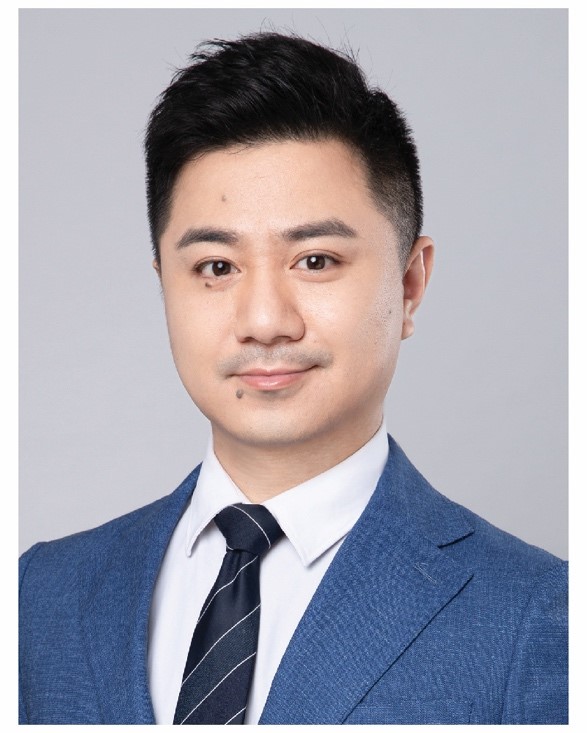
- 姓 名:
- 张洳源
- 研究领域:
- 知觉 决策 复杂问题解决 贝叶斯理论 神经网络
- 通信地址:
- 北京大学王克桢楼
- 电子邮件:
- ruyuanzhangATpku.edu.cn
- 个人主页:
- https://ruyuanzhang.github.io/
2006-2010, 本科,心理学;辅修:计算机;北京大学
2010-2016, 博士, 脑与认知科学, 美国罗切斯特大学
2016-2020, 博士后, 美国明尼苏达大学
2020-2020, 博士后, 美国国立健康研究院
2020-2025, 副研究员, 上海交通大学
2026-至今,预聘副教授,心理与认知科学学院,北京大学
1. 计算视觉神经科学
人类视觉系统接收了超过 80% 的进入大脑的感觉信息。视觉知觉的神经与计算机制一直是认知神经科学的核心研究议题。围绕这一方向,我的研究问题主要包括:(1)视觉决策过程中不确定性的计算与表征;(2)自上而下调制(如注意与学习)对人类大脑中群体编码的影响;(3)贝叶斯推断在神经系统中的实现机制。
2. 深度学习及其在神经科学中的应用
近年来,人工智能系统与人类大脑之间的比较研究迅速兴起。我们相信,机器学习与认知科学的交叉研究具有广阔前景,二者可以相互促进,共同推动通用智能的发展。我的相关研究问题包括:(1)视觉–语言模型与人类神经表征之间的对齐机制;(2)知觉与认知学习的神经机制。
3. 认知学习与决策
生物大脑作为最强大的智能体,通过思考、经验和感官获取知识。决策则是一种认知过程,涉及在多种备选方案中进行选择,以实现特定目标。认知学习与决策是理解人类如何思考、学习和行为的基础。我们的研究旨在揭示个体如何感知世界、学习解决问题以及做出决策。目前在该方向上的研究包括:(1)人类与机器中的持续学习机制;(2)结构学习与参数学习;(3)复杂问题解决(例如玩游戏、下围棋)中的人脑复杂决策与规划。
4. 计算精神病学
计算精神病学是一门连接基础计算神经科学与转化精神病学的交叉学科。该领域强调利用在健康个体或基础神经科学研究中建立的计算模型,来刻画精神疾病中异常认知行为的机制。我目前关注的研究问题包括:(1)精神疾病患者视觉工作记忆缺陷的计算机制;(2)精神疾病中的异常强化学习过程;(3)基于大模型的精神疾病模拟。
英文论著
代表性论文(#共同一作;*通讯作者)
Yang, L., Lyu, M., Wang, Y.J., Xie, X., Zhen, Z., Lai, J.H., Zhang, R.Y.*. (2026). Mental Bootstrapping Enables Human-Level Concept Learning in Self-Supervised Deep Models. Science Advances, 12, eaea7202.DOI:10.1126/sciadv.aea7202. Link, PDF
Yang, L., Zhang, R.Y., Wang, Y., & Xie, X. (2026). MMA++: Effective Multi-Modal Adaptation for Vision-Language Models. IEEE Transactions on Pattern Analysis and Machine Intelligence (TPAMI), 48(9), 10414-10428. Link, PDF
Zhong, G., Chen, T., Liu, J., Wei, Y., Zhang, X., Yang, P., Zhang, R.Y., Voon, V., Du, J., & Zhao, M. (2026). Attenuated dynamic impulse control in risky action under the escalating risk and reward in gambling disorder. Psychological Medicine, 56, e141, 1-9. Link, PDF
Saha, S., Li, S., Tuckute, G., Li, Y., Zhang, R.Y., Wehbe, L., Fedorenko, E., & Khosla, M. (2026). Modeling the language cortex with form-independent and enriched representations of sentence meaning reveals remarkable semantic abstractness. ICLR Re-Align Workshop. (accepted)
Xia, Y.F.#, Zhong, Y.#, Cheng, Z.J., Cong, E.*, Xu, Y.*, & Zhang, R.Y.*. (2026). Neurocomputational mechanisms of reward-based online mood regulation in adolecents with bipolar disorder and major depressive disorder. Psychoradiology, 6, kkag015. Link, PDF
Jin, Z., Li, S., Gu, S.*, Zhang, R.Y.*, & L,Y.*. (2026). A large-scale vision-language fMRI dataset for multi-modal semantic processing. Scientific Data. Link.
Sun, Z.H., Zhang, R.Y., Zhen, Z., Wang, D.H., Li, Y.J., Wan, X. & You, H. (2026). Systematic Abductive Reasoning via Diverse Relation Representations in Vector-symbolic Architecture. IEEE Transactions on Neural Networks and Learning Systems. Link.
Yang, L, Xie, X., Zheng, W., Fang, F.*, Zhang, R.Y.*. (2026) Neural prediction errors as a unified cue of abstract visual reasoning. IEEE Transactions on Pattern Analysis and Machine Intelligence (TPAMI), 48(2):1795-1810. Link, PDF.
Xia, Y.F., Gao.Y.Y., Cheng, Z.J., Fang, Z., Li, W., Kishimoto, T., Guo, L., Jiang, H., Zhang, R.Y.*. Atypical contributions of reward decisions to momentary mood in individuals with methamphetamine use disorder. BMC Psychiatry , 26, 57. Link, PDF
Yang, L., Zhen, H., Li, L., Li, Y., Zhang, H., Xie, X., Zhang, R.Y.*. (2025). Functional diversity of visual cortex improves constraint-free natural image reconstruction from human brain activity. Fundamental Research, 5(6), 2639-2648. Link, PDF
Huang, L., Shen, S., Sun, Y., Ou, S., Zhang, R.Y., Lange, F.P., Zhang, X. (2025). Center-surround inhibition in expectation and its underlying computational and artificial neural network models. eLife, 14:RP107301. Link, PDF
Teng, X.*, Zhang, R.Y.*. (2025). Sequential temporal anticipation characterized by neural power modulation and in recurrent neural networks. eLife, 13:RP99383. Link, PDF
Cheng, X., Shen, J., Li, J., Yuan, W., Wang, D., Wang, H., Zhang, R.Y., Xia, Y., Cao, X., Sha, W., He, S., Liu, Y., Tang, J., Zhang, Y., Cheng, Y., Yuan, T., & Zhao, D. (2025). Decision-Making Signatures of Methamphetamine and Alcohol Use Disorders. Biological Psychiatry: Cognitive Neuroscience and Neuroimaging. https://doi.org/10.1016/j.bpsc.2025.08.008, Link, PDF
Luo, G., Ma, X., Yea, J., Liu, Y., Xia, Y., Li, C., Kuang, Y., Zhang, R.Y., Lou, S., Yu, K., Wu, M., Li, W. (2025). Audio multi-feature fusion detection for depression based on graph convolutional networks. Ann. N. Y. Acad. Sci, 1150(1), 309-320. Link, PDF
Zhang, R. Y.#, Zhao, Y.J.#, Zhang, L., Ran, X., Chen, J., Ku, Y. (2025). Unexpected higher resilience to distraction during visual working memory in schizophrenia. Schizophrenia, 11, 93. Link, PDF
Tomoko Kishimoto#, Sun, L.#, Wang, C., Xu, H., Fu, Y., Cheng, Z.J., Jin, J., Zhang, R.Y.*. (2025). Behavioral and computational signatures of visual working memory deficits in adolescents with anxiety disorder. Current Psychology (44),10754-10768. Link, PDF
Cheng, Y.A., Sanayei, M., Chen, X., Jia, K., Li, S., Fang, F., Watanabe, T., Thiele, A., Zhang, R.Y.* (2025). A neural geometry approach comprehensively explains apparently conflicting models of visual perceptual learning. Nature Human Behaviour, 9, 1023-1040. Link, PDF
Zhang, Y., Hedley, F.E., Zhang, R.Y.*, Frances Jin*. (2025).Towards quantitative cognitive-behavioral modeling of psychopathology: An active inference account of social anxiety disorder. Journal of Psychopathology and Clinical Science,134(4),363-388. Link, PDF
Pan, W., Geng, H., Zhang, L., Fengler, A., Frank, M.J., Zhang, R.Y.*, Hu, C.P.*. (2025). dockerHDDM: A user-friendly environment for Bayesian Hierarchical Drift-Diffusion Modeling. Advances in Methods and Practices in Psychological Science. https://doi.org/10.1177/25152459241298700. Link, PDF
Yang, L., Zhang, R.Y., Chen, Q., Xie, X. (2025). Learning with enriched inductive biases for vision-language models. International Journal of Computer Vision. https://doi.org/10.1007/s11263-025-02354-1. Link, PDF
Chai, Y*. Zhang, R.Y. (2024). Exploring methodological frontiers in laminar fMRI. Psychoradiology, 4, kkae027. Link, PDF
Li S, Li Y*, Zhang, R.Y.*. (2024). Reconstructing continuous language from brain signals measured by fMRI based brain-computer interface. Brain-X, 2:e70001. Link, PDF
Gao, Y-Y., Fang, Z., Zhou, Q.*, Zhang, R.Y.*. (2024). Enhanced 'learning to learn' through a hierarchical dual-learning system: the case of action video game players. BMC Psychology, 12, 460. Link, PDF
Yang, L., Zhang, R.Y., Wang, Y., Xie, X. (2024). MMA: Multi-Modal Adapter for Vision-Language Models. In Proceedings of the IEEE/CVF Conference on Computer Vision and Pattern Recognition (CVPR), 23826-23837. Link, PDF
Fang, Z., Zhao, M., Xu, T., Li, Y., Xie, H., Quan, P., Geng, H., Zhang, R.Y.*. (2024) Individuals with anxiety and depression use atypical decision strategies in an uncertain world. eLife 13:RP93887. Link, PDF
Wang, Q.*, Wang, Q., Zhang, R.Y.*. (2023). Claim causality with clarity. Psychoradiology, 3, kkad007. Link, PDF
Cheng, Z.J.#, Yang, L.#, Zhang, W.H., Zhang, R.Y.*. (2023). Representational geometries reveal differential effects of response correlations on population codes in neurophysiology and functional magnetic resonance imaging. Journal of Neuroscience, 43(24), 4498-4512. Link, PDF.
Zhao, S., You, H., Zhang, R.Y., Si, B., Zhen, Z., Wan, X., Wang, D.H. (2023). An interpretable neuro-symbolic model on raven’s progressive matrices reasoning. Cognitive Computation, 15(5), 1703-1724. Link, PDF
Kuang, Y., Ma, D., Lan, Z.H., Zeng, S.H., Li, Y., Shang, M., Zhang, R.Y., Wang, L.H., Zhao, B.L., Li, W.D. (2023). The rapid change of mental health in college students after on-campus quarantine in Shanghai 2022 Covid lockdown. Frontiers in Public Health, 11, 1132575. Link, PDF
Yang, L., You, H., Zhen, Z., Wang, D-H., Wan, X., Xie, X., Zhang, R.Y.*. (2023). Neural prediction errors enable abstract analogical reasoning in human standard intelligence tests. In International Conference on Machine Learning (ICML). PMLR. Link, PDF.
Xu, Y.#, Yang, L.#, You, H., Zhen, Z., Wang, D-H., Wan, X., Xie, X., Zhang, R.Y.*. (2023). RuleMatch: matching abstract rules for semi-supervised learning of human standard intelligence tests. In Proceedings of the 32nd International Joint Conference on Artificial Intelligence (IJCAI). Link, PDF.
Kong, L.#, Qiu, S.#, Chen, Y., He, Z., Huang, P., He, Q., Zhang, R.Y., Feng, X-Q, Deng, L, Li, Y, Yan, F., Yang, G-Z., Feng, Y. (2023). Assessment of vibration modulated regional cerebral blood flow with MRI. NeuroImage, 119934. Link, PDF
Y, A., Lu, W., Wang, S., You, H., Zhang, R.Y., Wang, D.H., Zhen, Z., Wan, X. (2022). Visual perception inference on raven’s progressive matrices by semi-supervised contrastive learning. In (eds) Artificial Intelligence. CICAI 2022. Lecture Notes in Computer Science(), vol 13605. Springer, Cham. (best student paper award). LINK, PDF
Grier, M.D., Yacoub, E., Adriany, G., Lagore, R.L., Harel, N., Zhang, R. Y., Lenglet, C., Ugurbil, K., Zimmermann*, J., Heibronner, S.R*. (2022). Ultra-high field (10.5T) diffusion-weighted MRI of the macaque brain. NeuroImage, 119200. Link, PDF
Geng, H., Chen, J.*, Hu, C.P., Jin, J, Raymond C. K. Chan, Li, Y., Hu, X., Zhang, R.Y.*, Zhang, L. (2022). Promoting computational psychiatry in China. Nature Human Behaviour, 6, 615-617. Link, PDF
Zhao, Y.J.#, Ma, T.#, Zhang, L., Ran, X., Zhang, R. Y.*, Ku, Y.* (2021). Atypically larger variability of resource allocation accounts for visual working memory deficits in schizophrenia. PLoS computational biology, 17(11): e1009544. Link, PDF
Zhang, R. Y.#, Chopin, A.#, Shibata, K., Lu, Z. L., Jaeggi, S., Buschkuehl, M., Green, C.S., & Bavelier, D. (2021). Action video game play facilitates 'learning to learn'. Communications biology, 4, 1154. Link, PDF
Zhang, C., Duan, X., Wang, L., Li, Y., Yan, B., Hu, G., Zhang, R. Y.*, Tong, L*. (2021). Dissociable neural representations of adversarially perturbed images in deep neural networks and the human brain. Frontiers in Neuroinformatics, 15, 677925. Link, PDF
Yang, L., Zhang, R. Y., Li, L., Xie, X. (2021). SimAM: a simple, parameter-free attention module for convolutional neural networks. In International Conference on Machine Learning (ICML). PMLR. Link, PDF
Kishimoto, T., Wen, X., Li, M., Zhang, R. Y., Yao, N., Huang, Y., Qian, M. (2021). Vigilance-avoidance toward negative faces in social anxiety with and without comorbid depression. Frontiers in Psychiatry, 12, 410. Link, PDF
Barbot, A., Park, W. J., Zhang, R. Y., Ng, C., Huxlin, K. R., Tadin, D., Yoon, G. (2021). Functional reallocation of sensory processing resources caused by long-term neural adaptation to altered optics. eLife, 10, e58734. Link, PDF
Liu, S., Zhang, R. Y., & Kishimoto, T. (2021). Analysis and prospect of clinical psychology based on topic models: hot research topics and scientific trends in the latest decades. Psychology, health & medicine, 26(4), 395-407. Link, PDF
Kay, K., Jamison, K. W., Zhang, R. Y., & Uğurbil, K. (2020). A temporal decomposition method for identifying venous effects in task-based fMRI. Nature Methods, 17(10), 1033-1039. Link, PDF
Zhang, R. Y.*, Wei, X. X., & Kay, K. (2020). Understanding multivariate brain activity: evaluating the effect of voxelwise noise correlations on population codes in functional magnetic resonance imaging. PLoS computational biology, 16(8), e1008153. Link, PDF
Zhang, R. Y.*, & Kay, K. (2020). Flexible top-down modulation in human ventral temporal cortex. NeuroImage, 218, 116964. Link, PDF
Margalit, E., Jamison, K. W., Weiner, K. S., Vizioli, L.,Zhang, R. Y., Kay, K. N., & Grill-Spector, K. (2020). Ultra-high-resolution fMRI of human ventral temporal cortex reveals differential representation of categories and domains. Journal of Neuroscience, 40(15), 3008-3024. Link, PDF
Yao, S., Akter, F., Zhang, R. Y., Li, Z. (2020). Letter to the Editor. Structural retinotopic analysis at 7-Tesla MRI in pituitary macroadenomas. Journal of Neurosurgery, 133(5), 1622-1624. Link, PDF
Yao, S., Lin, P., Vera, M., Akter, F., Zhang, R. Y., Zeng, A., Golby, A.J., Xu, G., Tie, Y., & Song, J. (2020). Hormone levels are related to functional compensation in prolactinomas: a resting-state fMRI study. Journal of the Neurological Science, 411, 116720. Link, PDF
Zhang, R. Y.*, Wei, X.X., Teng, X., Kay, K. (2019). Trial-by-trial voxelwise noise correlations improve population coding of orientation in human V1. Proceedings of Conference on Cognitive Computational Neuroscience (CCN). PDF
Zhang, C., Qiao, K., Wang, L., Tong, L., Hu, G.,Zhang, R. Y.*, & Yan, B*. (2019). A visual encoding model based on deep neural networks and transfer learning. Journal of Neuroscience Methods, 325, 108318. Link, PDF
Fang, W., Zhang, R. Y., Zhao, Y., Wang, L., & Zhou, Y. D. (2019). Attenuation of pain perception induced by the rubber hand illusion. Frontiers in Neuroscience, 13, 261. Link, PDF
Kay, K., Jamison, K. W., Vizioli, L., Zhang, R. Y., Margalit, E., & Ugurbil, K. (2019). A critical assessment of data quality and venous effects in ultra-high-resolution fMRI. NeuroImage, 189, 847-869. Link, PDF.
Zhang, R. Y.*, & Tadin, D. (2019). Disentangling locus of perceptual learning in the visual hierarchy of motion processing. Scientific reports, 9(1), 1-10. Link, PDF, Supp
Zhang, R. Y.*, & Kay, K. (2018). The impact of noise correlation on multivariate pattern classification in fMRI. Proceedings of Conference on Cognitive Computational Neuroscience (CCN). PDF
Zhang, C., Duan, X., Zhang, R. Y.*, Tong, L*. (2018). Representation of adversarial images in deep neural networks and the human brain. Proceedings of Conference on Cognitive Computational Neuroscience (CCN). PDF
Zhao, Y., Ran, X., Zhang, L., Zhang, R. Y.*, Ku, Y*. (2018). Modeling visual working memory in Schizophrenia. Proceedings of Conference on Cognitive Computational Neuroscience (CCN). PDF
Park, W. J., Schauder, K. B., Zhang, R. Y., Bennetto, L., & Tadin, D. (2017). High internal noise and poor external noise filter characterize perception in autism spectrum disorder. Scientific reports, 7(1), 1-12. Link, PDF
Zhang, R. Y., Engel, S. A., & Kay, K. (2017). Binocular Rivalry: a window into cortical competition and suppression. Journal of Indian Institute of Sciences, 97(4), 477-485. Link, PDF
Zhang, R. Y.*, Kay, K. (2017). Attentional field model does not explain task-dependent spatial representation in human ventral temporal cortex. Proceedings of Conference on Cognitive Computational Neuroscience (CCN). PDF
Nyquist, J. B., Lappin, J. S., Zhang, R. Y., & Tadin, D. (2016). Perceptual training yields rapid improvements in visually impaired youth. Scientific reports, 6(1), 1-13. Link, PDF ~Press Release, Science Daily
Cavanaugh, M. R.#, Zhang, R. Y.#, Melnick, M. D., Das, A., Roberts, M., Tadin, D., Carrasco, M., & Huxlin, K. R. (2015). Visual recovery in cortical blindness is limited by high internal noise. Journal of Vision, 15(10):9, 1-18. Link, PDF
Bejjanki, V. R.#, Zhang, R. Y.#, Li, R., Pouget, A., Green, C. S., Lu, Z. L., & Bavelier, D. (2014). Action video game facilitates development of better perceptual templates. Proceedings of the National Academy of Sciences, 111(47), 16961-16966. Link, PDF, Supp, CBS News , Bloomberg
Zhang, R. Y.#, Kwon, O. S.#, & Tadin, D. (2013). Illusory Movement of stationary stimuli in the visual periphery: evidence for a strong centrifugal prior in motion processing. Journal of Neuroscience, 33(10), 4415-4423. Link, PDF